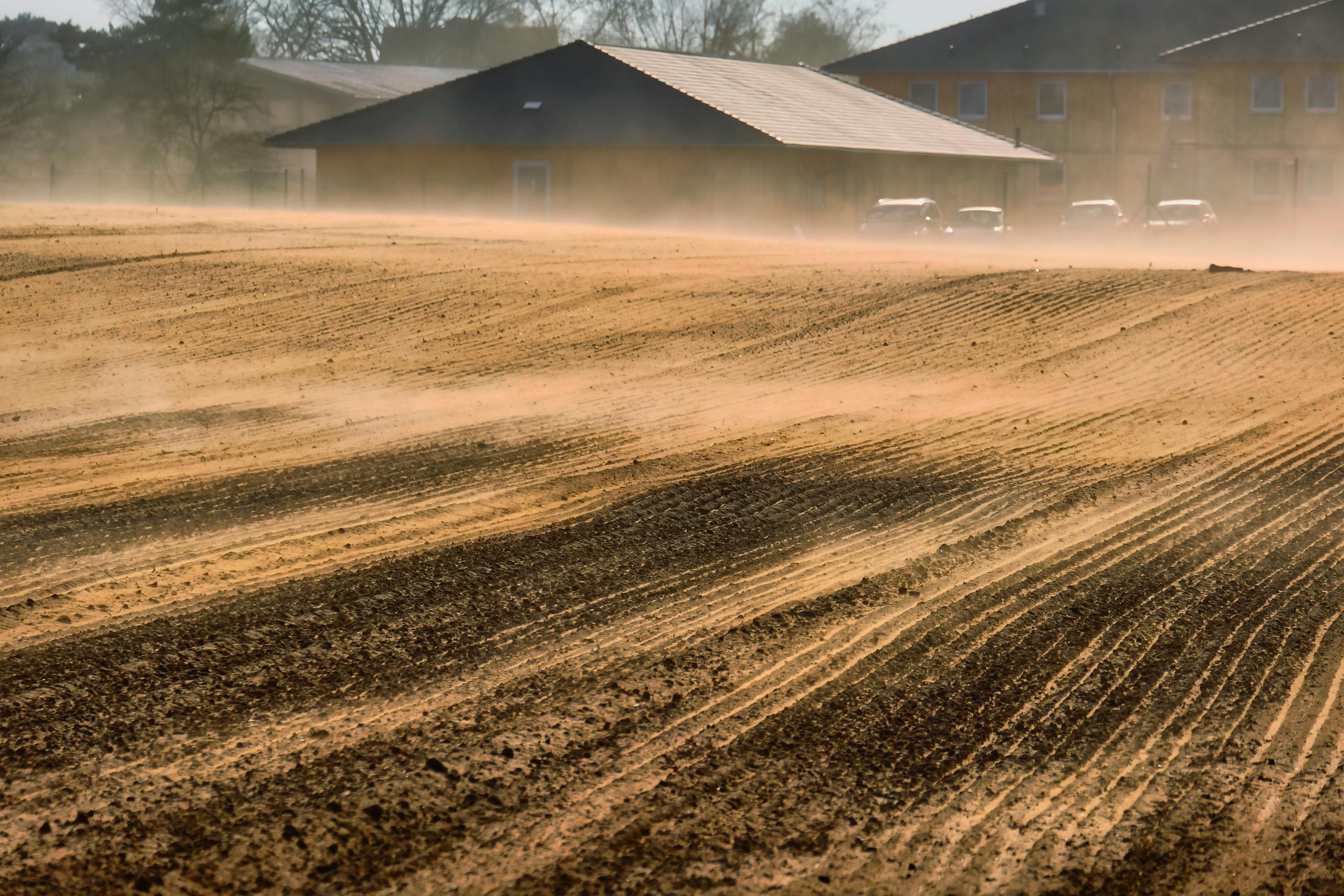
A new Maine-funded research project is examining whether PFAS-contaminated farm soil can become airborne as dust during tilling and field preparation, potentially exposing farmers and nearby communities. The study, led by the Maine Organic Farmers and Gardeners Association, focuses on how PFAS are distributed in fine soil particles and how far contaminated dust can travel. Sparked in part by experiences in Unity, Maine—where farmers showed higher PFAS levels than water contamination alone could explain—the research aims to clarify whether dust is a significant exposure pathway. Findings could help farmers, policymakers, and rural residents better assess risk and adopt practices that reduce airborne exposure, filling a critical gap in Maine’s broader response to PFAS contamination on farmland.
Studying PFAS Exposure Through Farm Dust in Maine