
Per- and polyfluoroalkyl substances, or PFAS, also known as forever chemicals, are synthetic substances that do not naturally occur in the environment and are known to have negative effects on human health. By testing well water samples for these chemicals, we can better understand the health risks for Maine households.

People in Maine are concerned about the potential for PFAS in their drinking water; the reason for their concern is clear. Maine has been in the news due to the discovery of contaminated soils on farms where sludge from sewage treatment plants was used as fertilizer over the last several decades (see the Maine PFAS Investigation map below). Most people in these rural areas rely on private wells as their primary source of drinking water, and recent studies have documented PFAS contamination in these wells. The Maine Department of Environmental Protection (DEP) is mitigating PFAS by installing filtration systems in homes in these areas.
Other areas in Maine are also at risk of contamination. At the Community Environmental Health Lab, we have been sampling private wells on Mt. Desert Island and sending samples to Maine Laboratories for analysis of 28 PFAS. We have found a surprising number of rural homes with PFAS in drinking water. We have partnered with the town of Tremont to help increase the rate of well water testing for PFAS. If you are a year-round resident of Tremont and are interested in having your drinking water tested for PFAS, please visit the link below. We will provide you with a test kit at no cost. (We have also initiated a pilot study in Deer Isle. Residents in our study area can also request a test kit using the link below. We have funding to test the drinking water for a few more neighbors of MDI High School. Nearby residents can also request a test kit using the link below.)
As of Summer 2026, we have tested 105 wells in Tremont, Maine. Of these, 69% have detectable PFAS, with 17% of 105 wells exceeding current state standards.
The six PFAS that are regulated in Maine public water are: PFOS, PFOA, PFHxS, PFNA, PFHpA, and PFDA.
Maine DEP maintains a PFAS Investigation Map.
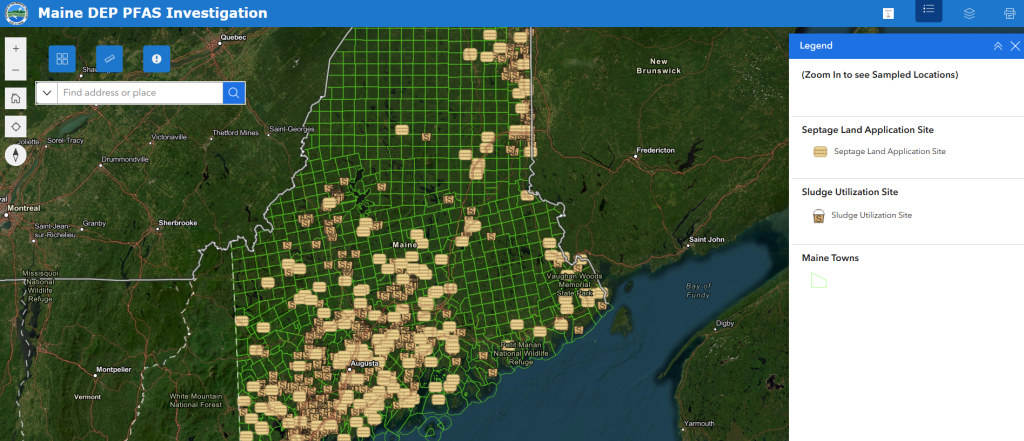
“This map depicts groundwater (residential well drinking water), soil, fish, surface water, and wastewater samples collected and analyzed for various PFAS. The map is continuously updated as more information and data become available. All data is carefully reviewed and validated. The information presented on this map is derived from several sources, including the Maine Environmental and Geographic Analysis Database (EGAD). Please note that the data illustrated on this map represents the most recent data available and does not represent a comprehensive dataset of all available information.”
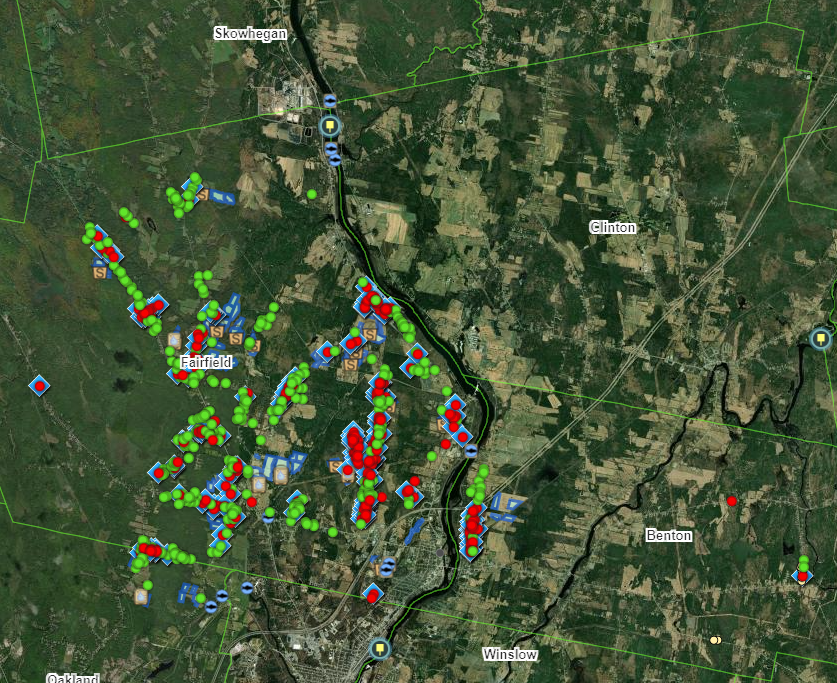
Zooming in on Fairfield, Maine, PFAS results for well water near land application sites can be visualized. A red dot indicates wells that exceed the drinking water standard. Those red dots surrounded by a blue diamond have had water treatment systems installed. The green dots have PFAS below the current Maine drinking water standard of 20 ng/L for six PFAS. This differs from the interactive map for MDI Bio Lab projects, where only those wells with no detectable PFAS are green. Those between 0 and 20 ppt are depicted in yellow on our maps.